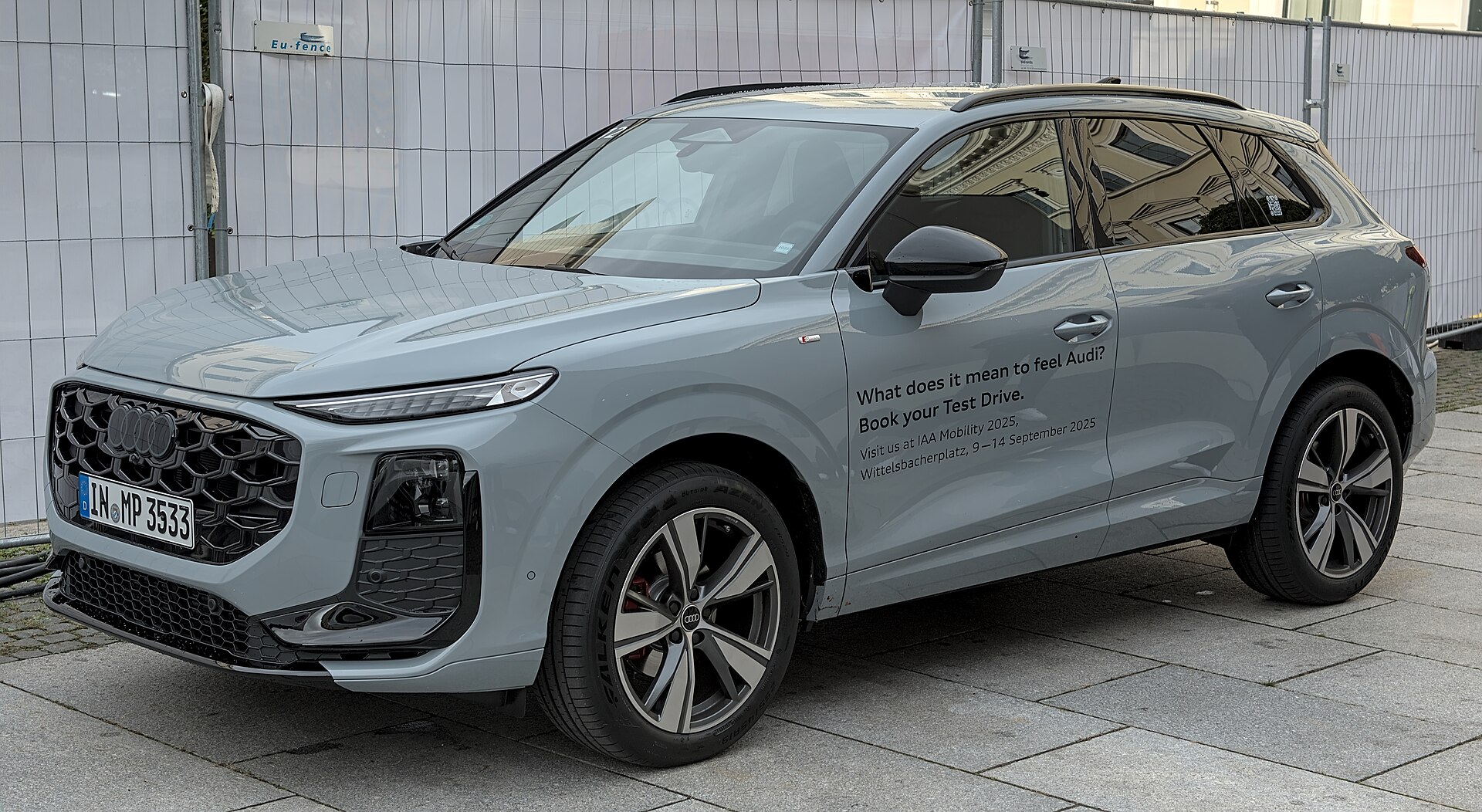
Identify the U.S. 2026 Q3 before comparing equipment
Use the U.S. MY2026 Q3 S line quattro as the reference in this article, rather than treating every car advertised as a 2026 Q3 as identical. Earlier stock and European derivatives can differ in powertrain, lighting and assistance equipment. Ask the seller for the VIN, production label, complete model code and original sales-market record. Resolve a disagreement between those records before using a brochure to compare prices; a new-model photograph cannot establish the identity of the vehicle being offered.
Keep the engine, transmission and drive system together
The U.S. reference combines a 2.0-litre TFSI petrol engine with a seven-speed S tronic transmission and quattro all-wheel drive. The cited output figures belong to that application, not to every Q3 sold worldwide. Match the engine and transmission identifiers to the factory build information. A power figure cannot establish which cameras, radar units or assistance packages are fitted, so keep those equipment checks separate from the engine comparison. Do not substitute a European engine listing for missing U.S. vehicle documents.
Verify assistance hardware and market-specific lighting
Ask which assistance functions are actually fitted, then compare the option list with the cameras, sensors, warning displays and diagnostic results on the same vehicle. Check replacement-glass and repair records where sensor mounting or calibration could have changed. European demonstration images are useful for recognizing a design, but cannot prove U.S. lighting functions or optional equipment. Where the seller promises a particular lamp signature, display or assistance feature, require the relevant option code and an operating demonstration rather than accepting a package name.
For example, an offer showing parking sensors should not be priced as a surround-view camera package unless the camera equipment and its operation are demonstrated on that VIN. Record the missing option or fault explicitly, so the buyer can compare a corrected price with a genuinely equipped car.
Read safety evidence within its tested scope
The Euro NCAP document cited here identifies a particular test vehicle and equipment scope. Check those details before applying any result to an offered Q3, and keep a rating separate from a statement about that car's present condition. A model-name recall search is also insufficient: use the VIN to check outstanding campaigns. Neither a crash rating nor U.S. sales approval establishes that the vehicle can be registered in the destination country. Obtain the destination decision for the actual variant and its supplied documents.
Check cargo, towing and local service against the intended use
Luggage-space comparisons need the rear-seat position and measurement method; an image of a large load area does not establish its measured capacity. If towing matters, obtain the permitted trailer weight, coupling specification and vehicle load information for the exact build. Then ask a workshop at the destination about diagnostics, keys, parts and software support for that VIN. Confirm maps, account territory and connected functions separately, since an installed screen does not demonstrate that every online service will work after export.
Make the quotation describe the vehicle that will arrive
The purchase comparison should identify generation, engine, drive system, assistance options and the original sales market before ranking offers by price. Put the agreed VIN, equipment, inspection findings, recall status and required certificates in the quotation or contract attachment. A seller using older photographs or another market's equipment list should correct the file before a non-refundable payment. Keep condition, freight, taxes and warranty territory in a dated commercial offer; they are not permanent specifications of the Q3 nameplate.
Frequently asked questions
Which identity document should be requested first?
Start with the VIN, build label, factory model code and original sales-market document. These records must identify the same Audi Q3 before equipment or price is compared.
Can another market’s specification be copied?
No. A specification from another market is only a research lead. Use it only after the derivative, production period and factory identifiers match the offered Audi Q3.
How should safety ratings be used?
Match the rating to its tested body, equipment and production scope, then check recalls by VIN. A rating does not replace destination approval or a physical inspection.
What requires a pause before payment?
Pause before payment when the VIN, derivative, powertrain, sales market or compliance documents conflict, or when the supplier cannot provide dated evidence for a material claim.
What did the research not establish?
This research does not prove the condition, history, exact equipment or destination eligibility of an individual Audi Q3. Those points require unit-specific documents and inspection.
Sources
- Audi of America announcement: all-new 2026 Q3Audi of America · 2026-10-17
- Audi Q3 Euro NCAP 2025 results and datasheetEuro NCAP · 2026-10-17
- NHTSA VIN DecoderNational Highway Traffic Safety Administration · 2026-08-22
- NHTSA RecallsNational Highway Traffic Safety Administration · 2026-08-22
- Vehicle RegulationsUnited Nations Economic Commission for Europe · 2026-08-22
- 2026 Audi VIN Breakdown Sheet for U.S. ModelsAudi of America · 2026-10-17