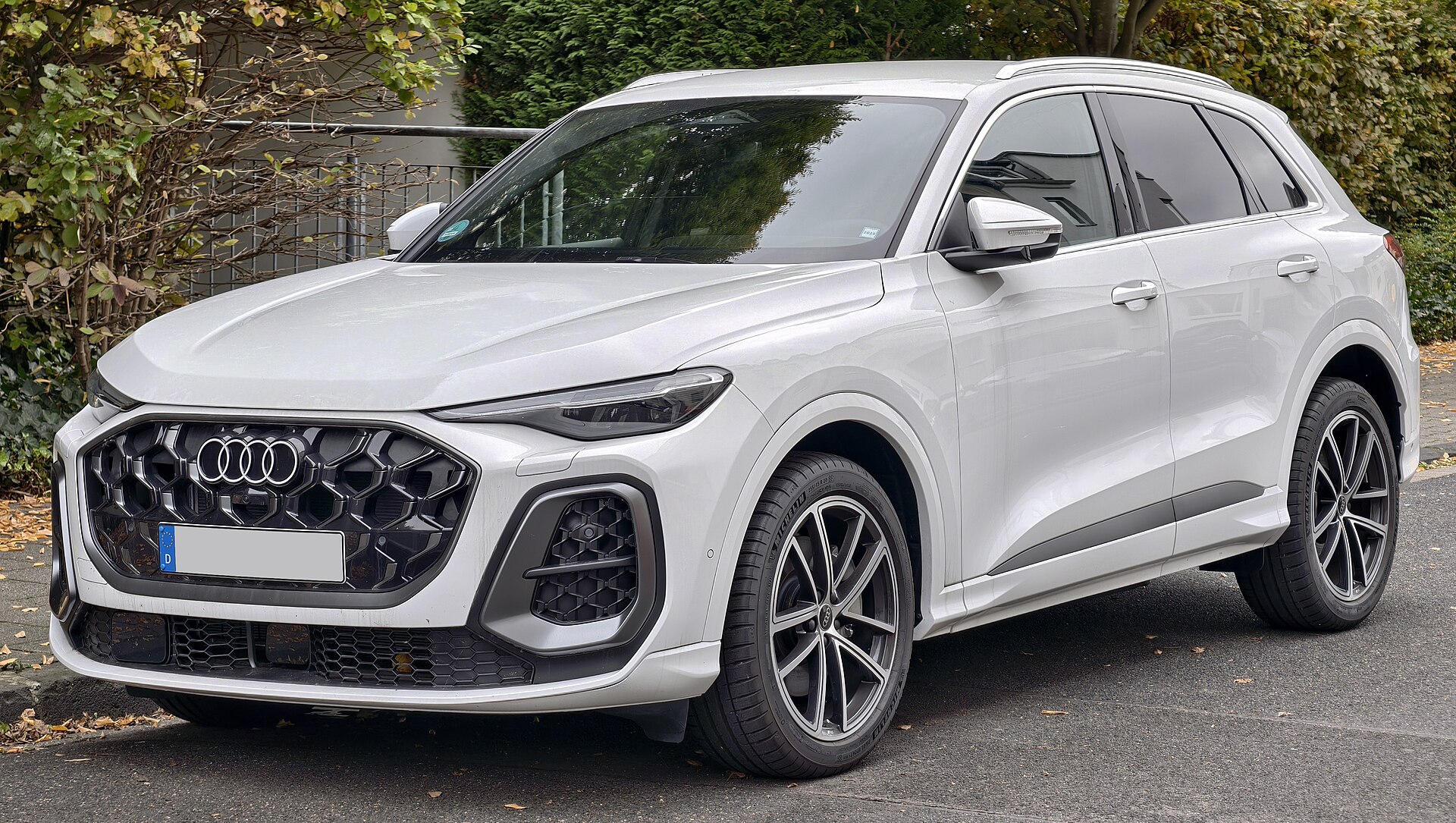
Separate Q5, Q5 Sportback and SQ5 before pricing
Use the U.S. MY2026 Q5 quattro as the reference configuration in this article. The Q5 name alone does not identify a body, engine or software entitlement, and figures from SQ5 or Q5 Sportback should not be copied without checking their own documentation. Request the VIN, production month, full factory model code, engine code, body derivative and original sales market. If the quotation omits the derivative, ask for a corrected description before judging whether its price represents the vehicle that will be delivered.
Keep performance figures attached to the reference variant
The cited U.S. Q5 quattro combines a 2.0-litre TFSI petrol engine, automatic transmission and quattro all-wheel drive. If a seller cites an acceleration time, request manufacturer documentation matching the U.S. MY2026 Q5 version and test conditions; do not treat that figure as an acceptance test result for the individual vehicle. Check engine and transmission identifiers and compare like-for-like tires and equipment. A faster quoted time cannot establish software availability, a stronger braking package or a different body variant. Where a seller relies on an SQ5 document, require a source that actually describes the offered Q5.
Verify body and equipment on the physical car
Photograph the body, rear hatch, seating arrangement and option labels of the actual vehicle rather than relying on a shared dealer gallery. Compare the order codes with the installed lamps, wheels, brakes and assistance hardware where these affect the purchase. Record diagnostic faults and repair history before accepting a claim that a feature is ready to use. This separates a missing option from a malfunctioning system and prevents a Sportback illustration or an SQ5 equipment list from silently redefining a standard Q5 quotation.
Confirm digital services in the destination territory
Ask which services belong to the car, which require a subscription and which depend on the account or sales region. Confirm the destination availability of maps, connected functions, emergency calling and software support with the relevant service provider. Where a seller includes digital features in the price, identify the activation term and whether the entitlement transfers to the buyer. A display or menu entry is evidence of installed hardware, not proof of a continuing online service after export. Price unavailable services as exclusions rather than assuming they can be restored.
Ask the seller to distinguish an installed display from an active service contract. A dated confirmation of territory, renewal cost and transfer conditions lets the buyer decide whether an advertised digital option has continuing value after delivery.
Match safety results and registration evidence separately
The cited IIHS assessment has a body and production scope that must be checked before using it for the offered car. Review the tested equipment and any manufacturing cutoff instead of describing the result as universal. Inspect restraint and assistance systems on the actual vehicle, and query recalls by VIN. Keep these checks separate from the destination registration decision: a safety rating cannot replace the required conformity evidence. Ask who will supply necessary certificates and who bears the cost if the offered configuration is not accepted.
Build the purchase decision around unresolved differences
Compare offers only after the body, powertrain, equipment and service territory are clear. Attach the VIN, options, inspection findings, recall status and written service limitations to the commercial agreement. Include parts and diagnostic access in the ownership budget, alongside freight, taxes and any required adaptations. If documents describe different variants or the seller cannot substantiate a material software promise, resolve that difference before a non-refundable payment. Preserve the date and scope of the offer so a later change in availability does not become a permanent model specification.
Frequently asked questions
Which identity document should be requested first?
Start with the VIN, build label, factory model code and original sales-market document. These records must identify the same Audi Q5 before equipment or price is compared.
Can another market’s specification be copied?
No. A specification from another market is only a research lead. Use it only after the derivative, production period and factory identifiers match the offered Audi Q5.
How should safety ratings be used?
Match the rating to its tested body, equipment and production scope, then check recalls by VIN. A rating does not replace destination approval or a physical inspection.
What requires a pause before payment?
Pause before payment when the VIN, derivative, powertrain, sales market or compliance documents conflict, or when the supplier cannot provide dated evidence for a material claim.
What did the research not establish?
This research does not prove the condition, history, exact equipment or destination eligibility of an individual Audi Q5. Those points require unit-specific documents and inspection.
Sources
- 2026 Audi Q5 safety assessmentInsurance Institute for Highway Safety · 2026-10-17
- NHTSA VIN DecoderNational Highway Traffic Safety Administration · 2026-08-22
- NHTSA RecallsNational Highway Traffic Safety Administration · 2026-08-22
- Vehicle RegulationsUnited Nations Economic Commission for Europe · 2026-08-22
- NHTSA vehicle-import informationNational Highway Traffic Safety Administration · 2026-10-17
- 2026 Audi VIN Breakdown Sheet for U.S. ModelsAudi of America · 2026-10-17